


Race Q&A
Program Positioning & Value
What is the Youth Ultra Gobi in essence, and how is it different from a regular competition?

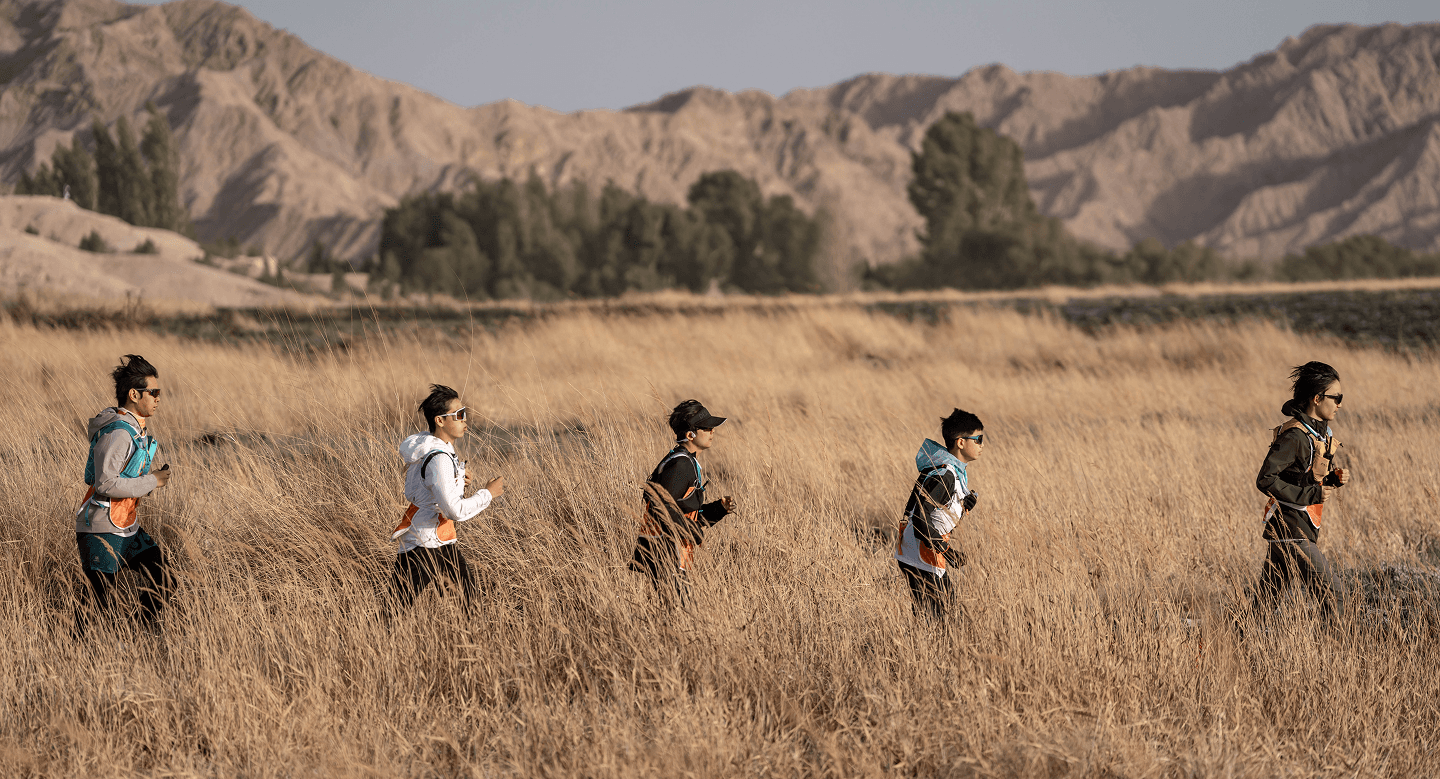
Youth Ultra Gobi (青戈赛), officially known in Chinese as 玄奘之路青少年戈壁挑战赛, is not a conventional “competition,” but rather a youth development journey centered on Action, Teamwork, and Service. It consists of three stages—Campus Experience → City Exchange → Gobi Challenge, guiding students progressively through the dimensions of Heart, Mind, and Body along the path of To Know→ To Become→ To Make Known. Throughout the process, the emphasis is on educational value and authentic experiences, while also providing a platform for exchange and joint development among international schools.
Are there awards or honors for participants?
Yes, three levels of honors are designed in the system for individual, team, and school:
For Individual: Certificate of Courageous, Completion Certificate, Commemorative Medal, Gold/Silver/Bronze Medal
For Team: Gold Gobi Team, Gold Title Team
For School: Shackleton Award, Team Spirit Award
Eligibility & Grouping
What is the age limit? How to decide groups?
Participants must be between 8 and 18 years old (born before March 1, 2018). The groups include G3-G6 (Elementary School, 68 km) and G7–G12 (Secondary School, 72 km). Each school may form multiple teams.
How many participants are there in a team?
A team usually consists of 6–12 members. Teams with fewer than 6 members are considered ineligible for team awards, though individual results will still count.
Are there any health restrictions for participants?
For safety reasons, students with medical conditions or health issues that make outdoor challenge activities unsafe are not eligible to participate. This includes, but is not limited to: Congenital heart or brain conditions, rheumatic heart disease, high blood pressure or cerebrovascular disease, myocarditis or other heart diseases, coronary artery disease, severe arrhythmias. students with serious psychological disorders or mental health conditions that could affect personal safety or team participation are not recommended to participate in the competition either.
Course of Competition
What does the course of competition involve?
Depending on each school’s registration schedule, there are:
Campus Experience (Sept–Dec): Each student shall complete a 5 km run.
City Exchange (Jan–Mar): A 2-day, 1-night event covering roughly 25 km.
Gobi Challenge (May 1–5): A 5-day, 4-night adventure, with a 3-day accumulative distance of 72 km / 68 km.
How can students improve their fitness?
Building fitness is a gradual process, integrated into the students’s daily routines:
Independent training: The Organizing Committee provides an outline of fitness guide, allowing students to persist in running, hiking, and other basic exercises in their daily life on their own.
School-based training: Some schools incorporate specialized preparations into their PE classes or extracurricular programs. If no unified arrangement is made by the school, students may also follow a personal training plan.
Can students join the Gobi Challenge directly?
No. The Youth Ultra Gobi is a complete growth path requiring the students to participate in the Campus Experience → City Exchange → Gobi Challenge in order.
How many kilometers do the participants cover each day during the Gobi Challenge? Do they run or walk?
The challenge is primarily hiking, in particular, Day 1: 25 km; Day 2: 23 km / 27 km; and Day 3: 20 km
Camp & Logistics
What are the accommodation and meals like? Could the students be able to take baths?
Accommodation Arrangement:
From May 1–3, the students will be arranged to large Gobi tents, with 12 students per tent, separated by gender. Teachers will accompany the students throughout the course to ensure their safety and living order.
On May 4, the students will switch to a quasi-four-star hotel in Dunhuang, providing a comfortable environment for rest.
Meals:
Meals are nutritionally balanced and include local specialty dishes, catering to diverse taste preferences of different students.
If a student has special dietary needs (allergies, religious restrictions, vegetarian/vegan, etc.), his/her parent(s) must provide truthful and detailed information at registration to the Organizing Committee. The Organizing Committee will record these information in a unified manner and clearly mark relevant dishes with eye appealing indications at the dinning place of the camp, reminding the students to make personal choices based on their own conditions.
Showering:
At the Gobi campsite, due to large temperature differences between day and night, showers are not provided to prevent the students from catching a cold. Clean wash areas will be available for basic hygiene.
After check in the Dunhuang hotel, the students may take showers normally.
Is it cold at night? Is it hot during the day?
Based on the data of past years, the daytime temperatures range from 20–28°C, and nighttime temperatures range from 5–10°C. Sleeping bags for the corresponding temperature needs are provided together with the tent; with these, so it should not be cold at night. During the daytime, the students are suggested to adjust their clothing as needed.
Safety & Medical Support
Could a child get lost after he/she falls behind?
Not at all. There are clear guideposts along the entire competition route, and each child is equipped with a GPS tracker and walkie-talkie, allowing the control center to monitor their location in real time and ensure they will not get lost. Even if a child walks comparably slowly, medical staff, support personnel, and a tail-end vehicle are on the course to provide assistance, ensuring complete coverage and safety.
What happens if a child feels unwell or cannot continue walking?
Our medical team will assess the situation on site. If it’s minor discomfort, the child may rest and then continue. If the child unable to continue, he/she will be transported back to the camp by the support vehicle for further rest and observation by a doctor. In all cases, the child’s safety and health are our top priority.
How is the safety ensured?
Every child is provided with a GPS tracker and walkie-talkie, allowing the command center to track their location in real time. Not only clear guideposts are set along the entire competition routine, we also arranged staff on duty along the route. In addition, professional medical teams and emergency vehicles will accompany the students at all times to escort the safety of them.
Mandatory rest points are also set up at the aid stations to ensure the students can recover and gain strength.
In the event of any extreme weather or emergency, the Organizing Committee will immediately activate the emergency plan, which may include rerouting, shortening the course, or temporarily suspending the competition. The safety of every child is after all always the highest priority.
Rules & Awards
What are the requirements to complete the competition?
A child is considered to have officially completed the competition if he/she finishes the full course, checks in at all required points, and carries all mandatory gear before closing time of each day. Violations such as taking a vehicle, missing check-ins, or failing to carry required gear will disqualify the results.
How are the gold, silver, and bronze medals awarded?
Medals are awarded daily based on the completion time of the child: if he/she reaches the standard time requirement, he/she may earn the gold or silver medal. If he/she completes before closing time, he/she may earn the bronze medal. In other words, every child can earn a medal of that day depending on their own effort. Their progress and perseverance throughout the day will be recognized.
How are the team honors determined?
Team honors are based on the collective performance of all team members. If all members of a team earn gold medals every day, with no withdrawal or violation of any rule, the team can receive the “Gold Gobi Award” or “Gold Title Award.” These awards represent teamwork and collective effort, rather than individual achievement.
Gold Gobi Award: For 12-member team; all members earn gold medals for all 3 days with no withdrawal or violation. If there is one member withdrawing once, the team may still receive the Gold Title Award.
Gold Title Award: For 6–11-member team; all members earn gold medals for all 3 days with no violation, and there could be one member withdrawing.
What school honors will be awarded?
School awards are awarded for team spirit and legacy, such as:
Shackleton Award: Recognizes schools whose teams demonstrate resilience and persevere to the end.
Team Spirit Awards: Discipline: No rule violation record throughout the whole course without breach of the Race Regulations and Rules; full compliance with regulations.Environmental Pioneer: No littering throughout the whole course; hygiene standards are met within the tent at the camp. oProcess Efficiency: All assemblies, check and record, and departures occur on time, with 100% punctuality without delay, and adherence to rules.
Others
Is mobile phones allowed to be brought to the site?
Yes. The Organizing Committee does not forbid the students to bring phones or smartwatches, but casual use at the campsite is not encouraged. Each school will have its own management rules, and the Organizing Committee can provide custody service in a unified manner. If a device is lost because it wasn’t submitted to the Organizing Committee for keeping, the student shall be solely responsible therefor. The students may also wear GPS-enabled smartwatches to keep their parents rest assured at any time.
Can parents accompany their students during the competition?
The Gobi campsite is subject to close-off management, so the parents may not keep company with their students. However, parents may meet their students at the Dunhuang hotel. The entire course of the Gobi Challenge will be livestreamed.
What if a child loses personal belongings?
The campsite has a lost-and-found point. Items found during the day are collected at a designated tent, will be publicly announced, and available for claim. After the competition, an online claim channel will be provided for parents to submit requests, and the Committee will help check and send back by mail.
However, Due to the remote Gobi environment, we cannot guarantee all lost items can be recovered. students are encouraged to take responsibility for keeping their belongings during the competition.
What equipment must be prepared?
Essential items include: hydration pack, single-layer jacket, sleeping bag, headlamp, etc., subject to the detailed checklist released subsequently by the Organizing Committee. The students purchase against the checklist.
Can a Fapiao (official VAT invoice) be provided?
Yes. We will collect fapiao application details one week after the completion of the Gobi Challenge.
What if a student cannot attend for the moment after registering? Can he/she get refund?
The Organizing Committee has a clear refund policy. Please refer to the notes for registration for information. In case of any change, it is recommended the parents to contact the school leader or Organizing Committee immediately.
Refund Rules: The deduction standards for refund upon refund request are as follows
1.If the withdrawal request is made after the Campus Experience but during the registration stage, the participant will get full refund
2.For City Exchange:
Request to refund within 3 days(inclusive) of payment: full refund
Withdrawal within 30 days (inclusive) before the City Exchange: 98% of the refund
Withdrawal 15–29 days before City Exchange: 95% of the refund
Withdrawal 4–14 days before City Exchange: 90% of the refund
Withdrawal 1–3 days before City Exchange: 83% of the refund
3.Gobi Challenge:
Withdrawal 30 days(inclusive) before Gobi Challenge: 83% of the refund
Withdrawal 15–29 days before Gobi Challenge: 80% of the refund
Withdrawal 4–14 days before Gobi Challenge: 70% of the refund
Withdrawal 1–3 days before Gobi Challenge: no refund